


Thursday Daily Brief: Designing Camp Programs to Lower Anxiety and Build Resilience
- Matthew Kaufman

- 8 hours ago
- 4 min read
A new report from the American Academy of Pediatrics highlighted a troubling rise in anxiety among children ages seven to thirteen. The research revealed higher rates of performance stress, social anxiety, and conflict avoidance. Schools are responding by adding wellness periods and skill-building blocks to help students regulate stress during the day.
This trend matters for your program design. Camps help children strengthen resilience through real activity, social belonging, and structured support. You improve your program when you design days that reduce anxiety, build coping skills, and support healthy stress responses through simple choices around pacing, ritual, movement, and predictable group structures.
What the Research Tells Us
The researchers found three key patterns that map directly to your camp environment. More children report stress during transitions at school. Social anxiety increases during unstructured time. Children progress when adults model calm behavior and give clear steps to follow.
These findings matter because you hold unstructured time, high movement days, and frequent transitions. You help children succeed when you build structure that lowers stress and builds belonging.
Start Strong with Morning Rituals
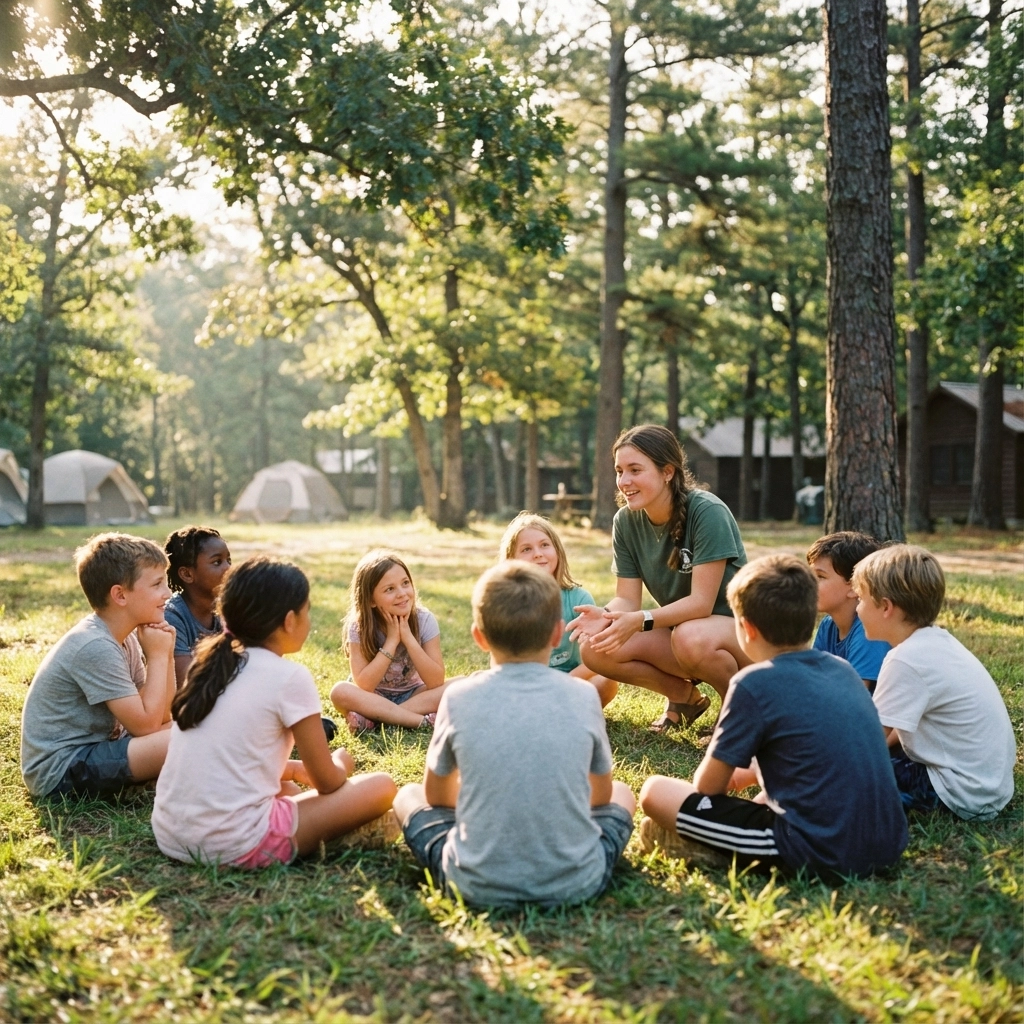
Morning rituals help children start the day with predictability. Predictability lowers stress for both campers and counselors. Create a simple routine: a group greeting, a short check-in question, and a quick review of the day. These rituals build connection through shared presence. Strong connection lowers anxiety across the group.
Master the Art of Transitions
Transitions are high stress moments for children. The report found children feel more anxious when adults rush transitions or give unclear instructions. Train your staff to give one clear direction at a time, use calm tone, stand where they can see the whole group, and walk with purpose instead of rushing. Staff mastery of transitions increases camper confidence throughout the day.
Build in Movement Breaks
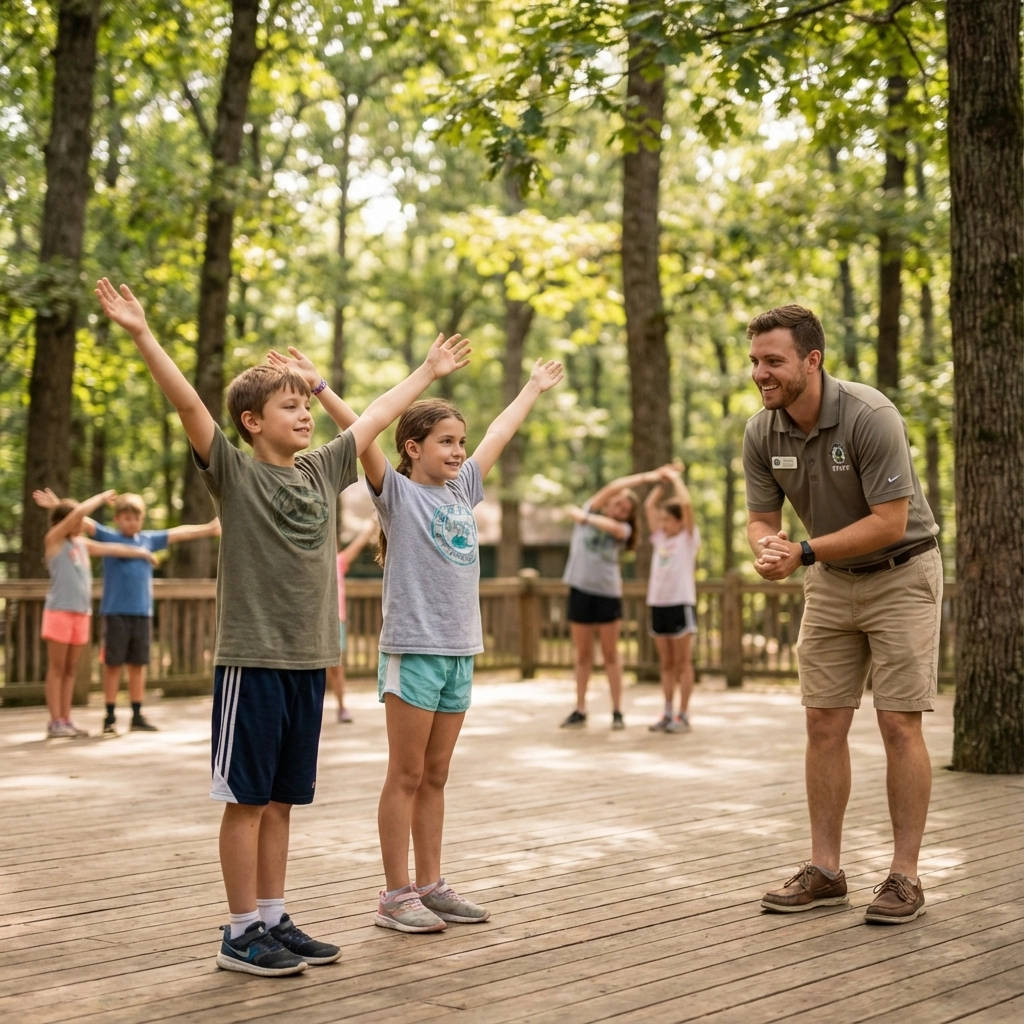
The AAP report referenced several studies linking physical movement to lower anxiety. Short bursts of movement activate healthy stress pathways and decrease worry. Add movement breaks between activities, simple games during waiting periods, and light stretching at the start of group meetings. Movement helps campers regulate stress hormones in healthy ways, supporting steady emotions and stronger engagement.
Think Small Groups
Large group settings raise anxiety for many children. You lower the pressure through smaller units. Build routines where children share in pairs or trios, counselors assign buddy partners during transitions, and campers meet with small cohorts during meals or reflection. Small groups build belonging, and belonging lowers stress.
Teach Simple Coping Skills
Camps help children practice coping skills through real tasks. You do not need long lessons. Short skills work better. Teach them to take one slow breath before speaking, ask for help using a simple phrase, step to the side during overwhelm, and reset with a quick grounding exercise. Counselors model these steps, and children adopt them through repetition.
Structure Choices Thoughtfully
Children gain confidence when they exercise choice, but too many choices raise anxiety. Offer two or three options at a time, explain each option clearly, and help campers commit and follow through. Choice increases motivation, while clear limits keep stress low.
Use Daily Themes for Focus
Themes give structure and focus. Children process the day more easily when they understand the purpose behind activities. Try teamwork day, try something new day, friendship day, or growth day. Themes help staff align tone and expectations while creating shared identity that increases belonging.
Redesign Unstructured Time
The AAP report found unstructured time increased anxiety for children who struggle with social skills. Add structure in small ways during free swim, lunch, or playground time. Offer clear activity stations, assign float counselors to support kids who drift alone, and add light direction when needed without taking away autonomy.
Support Campers with Social Challenges
Social anxiety shows up when children feel unsure of their place in the group. Train counselors to greet each camper by name, pair campers thoughtfully, narrate positive behavior they see, and check in with campers who withdraw. Simple interactions shape stronger connections.
Bring Predictability to High Challenge Areas
Swim, waterfront, and ropes hold high excitement and high stress. Give campers clear steps before they begin. Show them where they line up, tell them who will support them, and explain how they succeed. This structure reduces fear and increases participation.
Close Each Day Strong
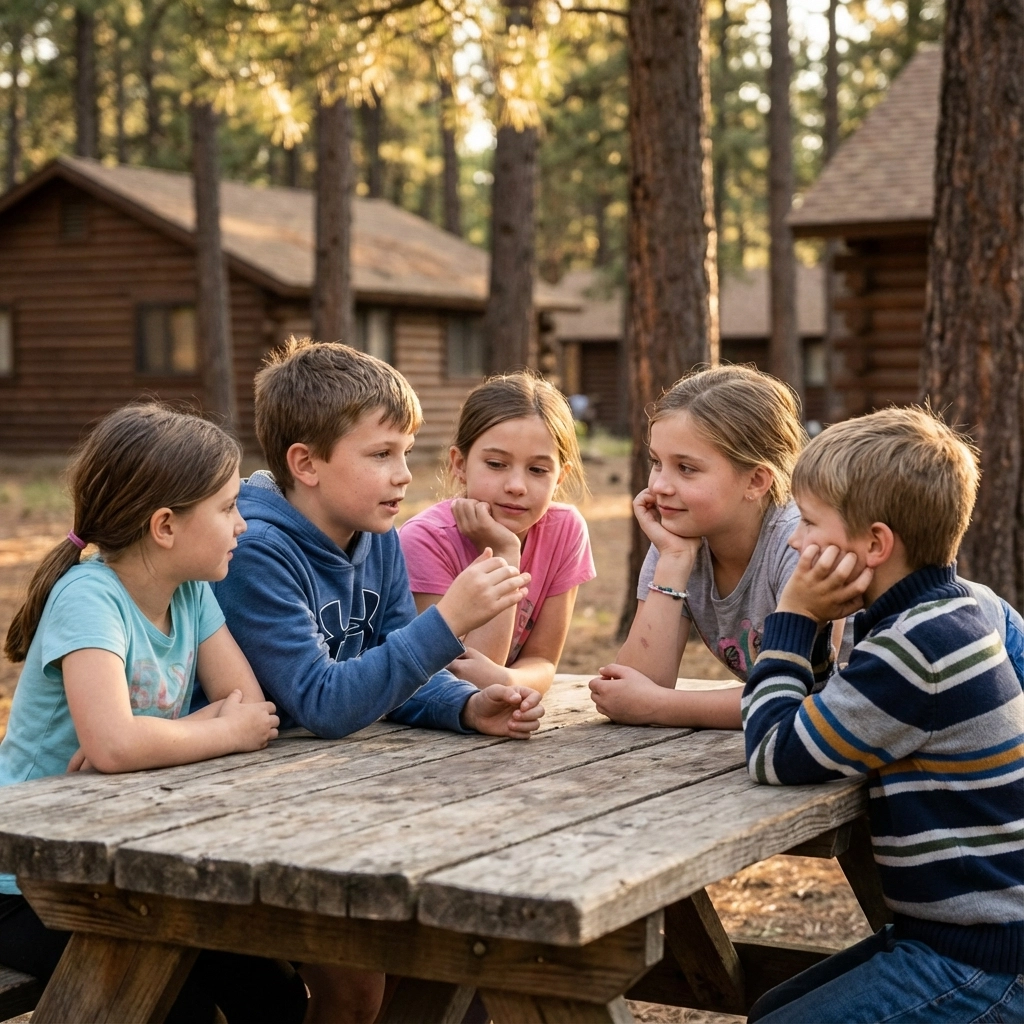
A short group closing helps children process their experiences and reinforces belonging. Simple closings work best: share one highlight, recognize one act of kindness, and preview tomorrow. These closings help children regulate emotions before they leave camp. Parents notice calmer end-of-day behavior.
Model Calm Leadership
Children absorb adult energy. Calm adults lower anxiety across the group. Teach staff to lower volume, use short instructions, keep neutral tone during conflict, and stay steady during delays. Calm leadership builds calm groups.
Camp works when children experience a healthy cycle of brain chemistry. Connection and ritual build trust. Goals and anticipation create motivation. Achievement and respect develop confidence. Play and physical activity release tension. When you engage this full cycle through thoughtful program design, children leave camp with stronger confidence and resilience.
You shape these outcomes through structure, belonging, and daily rituals. Your program design strengthens the campers you serve by giving them tools to navigate stress, practice problem-solving in real situations, and experience the deep satisfaction that comes from overcoming challenges alongside trusted friends.
Want more insights on youth leadership and camp innovation? Follow along at www.ilove.camp and connect with me on Instagram (@MattLovesCamp) and LinkedIn for daily updates from the camp world.
Comments