


The Summer Camp Daily Brief – October 29, 2025
- Matthew Kaufman

- Oct 29
- 4 min read
Updated: Oct 30
The Moment Every Camp Leader Recognizes
Picture this: you're standing in front of your staff, explaining the new activity rotation schedule. Some counselors are nodding enthusiastically. Others look politely engaged but distant. A few are clearly wondering when this meeting will end so they can get back to their campers.
Sound familiar? You've just witnessed the difference between compliance and commitment.
In camp leadership, we call this the buy-in challenge. It's that magical space where your team stops seeing policies as "your rules" and starts embracing them as "our mission." When a counselor believes they personally make the difference in how smoothly their cabin runs, or when a lifeguard treats safety as their personal calling rather than a checkbox, your entire culture shifts from obligation to ownership.
Why Shared Ownership Is Camp's Secret Weapon
At camp, shared ownership isn't just nice leadership theory: it's survival. You simply cannot run 200, 400, or 600 campers on good intentions and policy memos alone. You need every staff member feeling empowered to make decisions that align with your mission.
Think about your best counselor right now. They probably don't wait for permission to solve problems, do they? They feel genuinely responsible for the whole camp experience. And here's the key: that sense of ownership likely has nothing to do with their job title and everything to do with how you've invited them into the process.
When people help build something, they protect it.
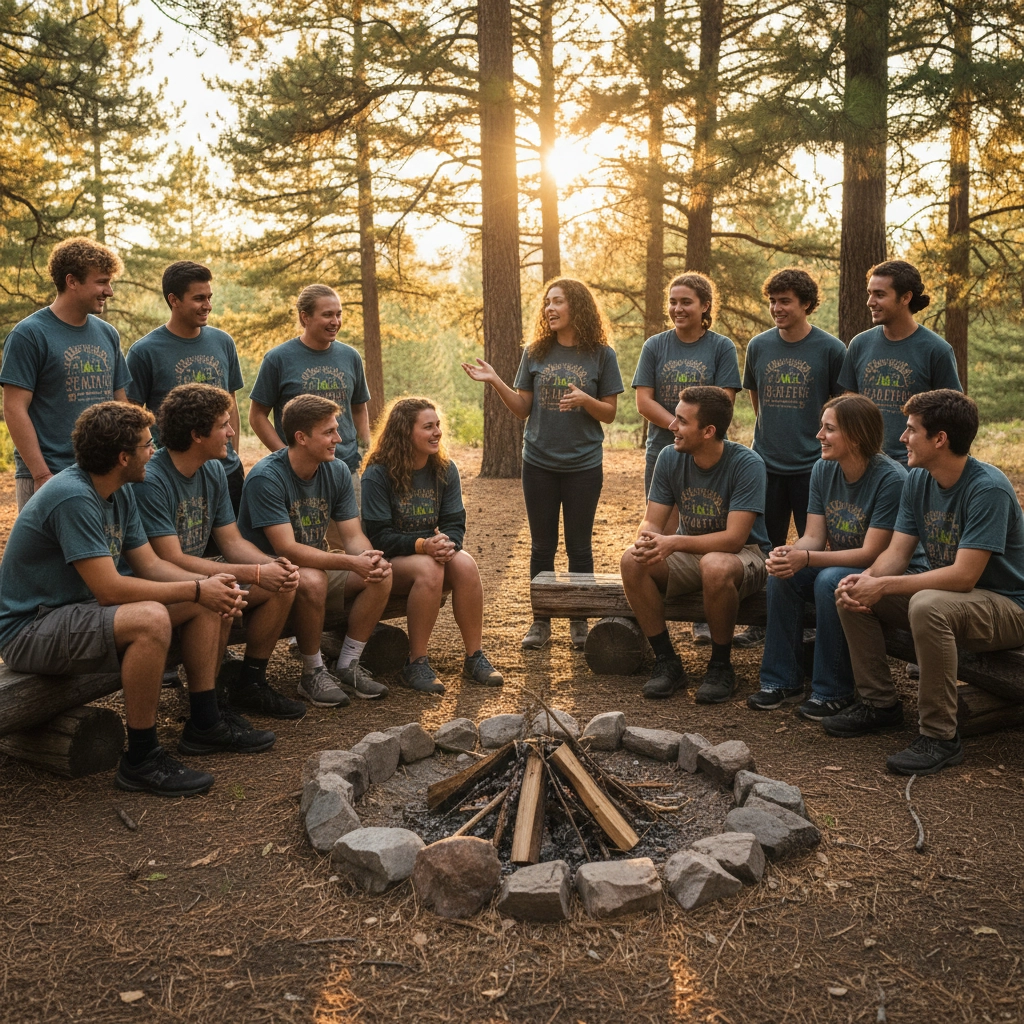
That's why smart camp leaders ask campers to help design Color War themes and let counselors contribute ideas for evening programs. Ownership transforms "someone else's decision" into "our brilliant idea." It's a leadership move many organizations outside camp still struggle to master.
The Psychology Behind Camp Ownership
Research calls this psychological ownership: the feeling that "this belongs to me" even when you don't technically own it. Studies show it dramatically increases motivation, engagement, and persistence. At camp, you see this in real time when a junior counselor stays late to organize an art shed they don't officially manage, or when a unit head volunteers to train someone outside their department.
They're not getting paid extra. They're acting from identity.
Psychological ownership emerges when three conditions are met:
People have a voice. They're invited to shape the work, not just perform it.
They see their impact. They understand how their effort connects to real results.
They trust leadership. They believe their contributions will be recognized, not ignored.
Miss any of these three elements, and ownership fades back into compliance.
What Great Camp Leaders Do Differently
They frame decisions as shared experiments. Instead of announcing "Here's how we're doing rest hour this summer," try "Here's what we're testing: what do you notice that could make it even better?" This simple shift from directive to collaborative creates instant psychological ownership.
They connect purpose to person. The best camp leaders can look any staff member in the eye and say, "You make our camp better because you..." and fill in the blank with something specific and true. Ownership thrives on recognition of personal significance.
They close the feedback loop. When staff share ideas, tell them what happened with that input: whether you implemented it or not. Radio silence kills trust. Clear feedback fuels the belief that voices actually matter.
They model shared accountability. Leaders who admit mistakes and invite solutions demonstrate that everyone's learning together. That's how culture becomes collaborative instead of punitive.
This Week's Action Steps
Ready to build more ownership on your team? Try these three moves:
Create a "We Built This" recognition system. Start documenting program ideas that came from your staff. Whether it's a new game, a schedule improvement, or a problem-solving approach, make sure everyone knows these innovations came from the team. Recognition reinforces ownership.
Hold a mini leadership council. Invite 4-5 staff members from different areas to meet about one camp-wide challenge: maybe meal transitions, downtime activities, or communication flow. Give them real authority to recommend changes and implement at least one suggestion within two weeks.
Shift your language patterns. Pay attention to how you talk about camp. Replace "my staff" or "my program" with "our team" and "our work." Language shapes mindset, and mindset builds culture.
The Bigger Picture
At its core, camp is a masterclass in distributed leadership. When you successfully empower dozens of young adults to make good choices on behalf of a shared mission, you're teaching them skills they'll use far beyond summer.
And here's the beautiful paradox: the more control you give away thoughtfully, the stronger your leadership becomes. Great camp leaders don't buy people off with perks or paychecks. They build genuine buy-in by sharing ownership of the purpose that brought everyone together in the first place.
Because when your counselors feel like co-creators rather than employees, magic happens. Problems get solved before you even hear about them. Innovation emerges from the ground up. And your camp culture becomes something everyone protects because everyone helped build it.
What ownership-building move will you try this week?
Follow @mattlovescamp for daily leadership insights and join the conversation at ilove.camp
Inspired by The Summer Camp MBA: 50 Leadership Lessons from Camp to Career — available at https://acabookstore.org/the-summer-camp-mba-50-leadership-lessons-from-camp-to-career-epub/
Comments