


Friday Daily Brief: Preparing Camps for Extreme Heat and Safer Summers
- Matthew Kaufman

- 1 day ago
- 4 min read
Global weather agencies just delivered some eye-opening news. The National Oceanic and Atmospheric Administration reported a 13 percent increase in days above ninety degrees compared to the previous ten-year average. Schools are shifting schedules. Cities are expanding cooling centers. Youth sports leagues are adding mandatory rest breaks.
This trend directly impacts your camp operations. You run full-day outdoor programs with children who need structure, hydration, and rest during increasingly unpredictable heat patterns. The American College of Sports Medicine noted higher heat risk for children during group activities, recommending shorter high-exertion blocks and stronger supervision structures.
The data shows a clear direction: you strengthen your operations when you prepare for more heat-related challenges.
What the Numbers Mean for Your Program
NOAA's latest findings reveal three concerning patterns. Hotter early season temperatures are starting sooner. Longer streaks of high heat are becoming the norm. Shorter breaks between heat waves give less recovery time.
These patterns map directly to your camp environment. You manage unstructured time, high-movement days, and frequent transitions: all during the hottest months of the year.
Building Your Heat Response System
Create a Clear Heat Response Playbook
Your staff need immediate clarity when temperatures spike. Build a simple playbook with specific triggers, temperature thresholds, required schedule adjustments, hydration rules, and shade requirements. Share this during staff training so your team can shift quickly during July and August heat waves.
Assess Your Shade Coverage Now
Walk your grounds and document coverage area by area. Check where groups line up, wait for transitions, eat meals, and where parents gather for pickup. Identify weak spots before the season starts. Temporary shade structures solve most gaps and dramatically reduce stress for both campers and staff.

Adjust Activity Intensity by Time
Move high-exertion activities to morning hours before 11 AM. Shift calmer programming: arts, STEM, boating instruction: to afternoon periods. Save shorter, lighter activities for late afternoon. When your staff understand the medical reasoning behind these changes, they follow protocols more consistently.
Upgrade Your Hydration Systems
Structure beats reminders every time. Build water breaks every twenty minutes during high-exertion activities. Add scheduled water stops during transitions. Equip counselors with water bottles or hydration packs. Install extra water stations in high-traffic areas. These structures reduce risk while keeping energy stable throughout the day.
Training Your Team for Heat Safety
Teach Early Warning Signs
Heat stress progresses quickly in children. Train staff to recognize slowed walking, face flushing, confusion, headache, nausea, and sudden quiet behavior. Create a simple response checklist: move to shade, provide water, notify supervisor, document the incident. Early response prevents escalations.
Increase Strategic Rest Blocks
Rest helps children reset and supports energy, mood, and safety. Add quiet shade time after lunch, short pauses between high-movement activities, and cooling stations near fields and courts. Rest also reduces stress for your staff, who need their energy to last all day.
Rethink Transportation During Heat
Buses hold heat even with ventilation running. Open all windows before loading, move boarding areas into full shade, cut waiting times for children standing in lines, and place staff on buses earlier to monitor comfort levels. These adjustments protect children during the highest heat periods.
Smart Monitoring and Communication
Switch to Heat Index Guidelines
Heat index reflects humidity and sun exposure: temperature alone gives incomplete information. Teach your staff to track heat index using thresholds from NOAA or state health departments. This improves decision-making across your entire program.
Expand Water-Based Programming
More heat naturally shifts programming toward water activities. Parents appreciate higher swim frequency, and children stay safer while enjoying water-based blocks. Consider adding free swim periods, low-pressure water play during transitions, and shaded water tables for younger divisions.
Strengthen Parent Communication
Parents follow weather stories closely and many worry about heat risk at camp. Share your heat response plan, hydration routines, early symptom guidelines, and activity change thresholds. Clear communication reduces parent anxiety and prevents misunderstandings on particularly hot days.
Supporting Your Staff Through Heat
Prepare Staff for Energy Management
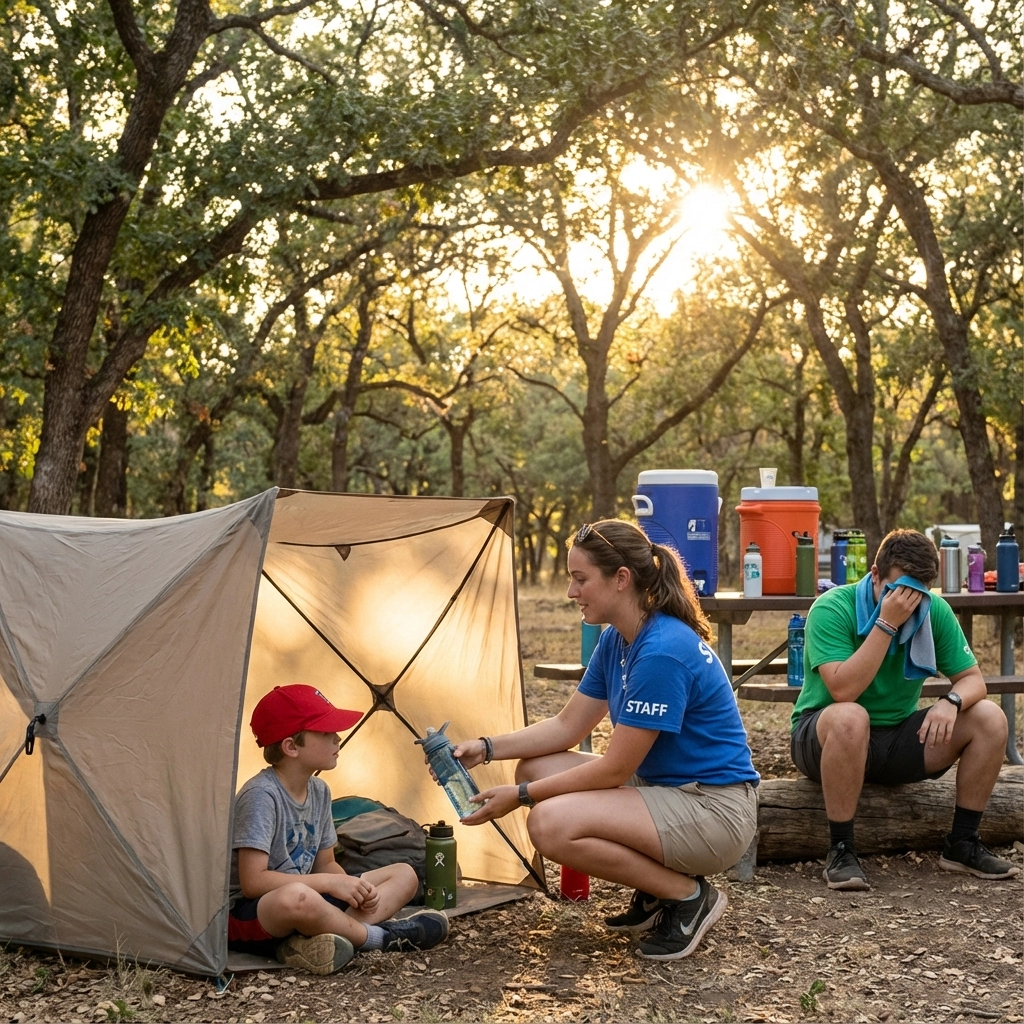
Heat drains counselors quickly, and your team leads better when they manage their energy proactively. Train staff to drink water consistently, rest when instructed, use shade during breaks, and set appropriate pace for their groups rather than matching high camper energy levels.
Plan Improvements for Next Summer
Weather trends suggest hotter seasons ahead. Evaluate potential shade upgrades, water infrastructure improvements, hydration equipment needs, cooling station locations, schedule design changes, and updated training plans. Programs that plan early consistently outperform those that react mid-season.
The data is clear: heat will continue shaping summer operations for the next decade. Camps that build comprehensive structure around shade, hydration plans, and proactive communication set themselves apart from programs still reacting to heat stress after problems develop.
You protect your campers and staff when you prepare for hotter days and shorter recovery periods between heat waves. Your program remains strong when your systems anticipate stress and reduce risk before children and families feel the impact.
Want more insights on youth leadership and camp innovation? Follow along at www.ilove.camp and connect with me on Instagram (@MattLovesCamp) and LinkedIn for daily updates from the camp world.
Comments